

Being a Dungeon Master isn’t just about knowing the rules or crafting a killer dungeon—it’s about telling stories that breathe, building worlds that feel alive, and giving your players a reason to come back every week hungry for more. If you’re looking to learn how to be a Dungeon Master in 2025, you’ve come to the right tavern. Grab a mug, pull up a stool, and let’s get to work.
Because believe me, it’s work. Beautiful, frustrating, rewarding work. And lucky for you, the tools we’ve got now? Better than ever.
🎒 Table of Contents
The Kegslayer’s Official DM Survival Kit
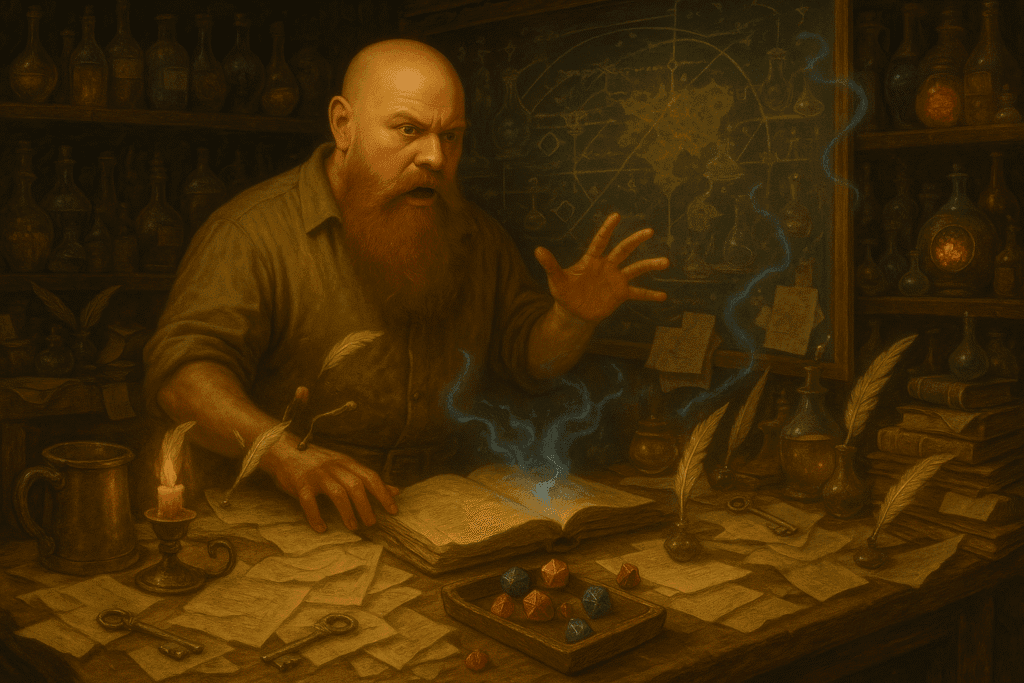
If you know Dave “The Kegslayer,” you know the man’s a walking, roaring embodiment of chaotic DM energy. He insists that being a Dungeon Master is 40% gear, 40% guts, and 20% snacks. Here’s what he carries into every session:
- A weathered notebook with loose-leaf scribbles and maps.
- At least five different dice sets — all blessed by ale, obviously.
- Condition rings, spell trackers, and an old pewter mug he swears boost his DM rolls.
- Backup mini’s for when players inevitably summon the unexpected.
- A playlist queued and ready for ambience, combat, and bar fights.
Dave says: “If ye ain’t got a flask, five dry-erase markers, and a backup mimic mini in your bag, are ye even runnin’ a game?”
Battle Maps Guide
In 2025, the question isn’t if you use battle maps. It’s which kind you’re using. Are you rolling out a massive printed grid across the table, or firing up Foundry with dynamic lighting and fog of war?
Physical Maps
Still loved for their tactile feel, physical maps are perfect for home groups.
- Reusable wet/dry erase mats are flexible and cost-effective.
- Printed maps with terrain are stunning, especially with 3D elements.
- Modular tiles offer mix-and-match freedom.
Digital Maps
Going virtual or hybrid? Tools like Owlbear Rodeo 2.0, Foundry VTT, and Roll20 have come a long way.
- Upload custom maps.
- Add lighting effects, music, and interactive elements.
- Players can access maps remotely or from their own devices.
Jane notes: “A map is more than a grid. It’s a window into the world. The more clearly you show the stakes, the more real they feel.”
Why Session Zero is Critical in 2025
Back in my day (gods, I feel old saying that), we skipped Session Zero more often than not. These days? Skipping it is like building a house with no foundation.
Topics You Must Cover:
- Tone & Theme: Are you running high fantasy or grimdark? Slapstick or intrigue?
- Player Boundaries: Lines, veils, X-card tools. Safety first.
- Rule Expectations: Homebrew rules, dice fudging, PvP? Lay it out.
- Character Hooks: Let players build with your world in mind.
- Scheduling & Commitment: Set expectations early.
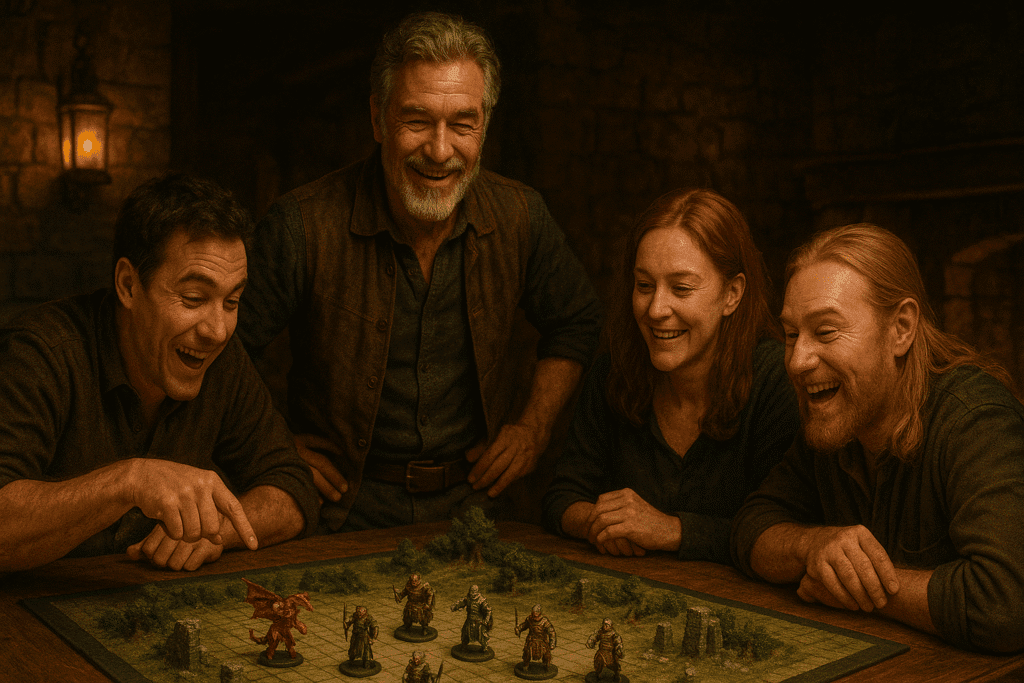
Caiden adds: “Session Zero is like scouting the dungeon before you leap in. It’s how you find the traps before they trigger.”
Best Digital Tools for DMs
The future’s bright, and full of dashboards. There are more digital tools for Dungeon Masters in 2025 than ever before, but here are the ones worth your time:
Prep & Worldbuilding
- World Anvil: Deep worldbuilding and lore connections.
- Notion / OneNote: Easy organisation, templates, and syncing.
Session Running
- Foundry VTT / Owlbear Rodeo: Immersive maps, dynamic lighting, and custom systems.
- Improved Initiative: Speed up combat and track effects.
Campaign Management
- Obsidian: Markdown-based, great for linking NPCs, timelines, and secrets.
- Trello: Visual scene boards and quest tracking.
Jane says: “Let the tools serve the story—not the other way around.”
Printable Prep Tools (Optional)
Not everything needs a battery. Some of the best DM tools still come printed, laminated, and slid into a binder:
- Initiative cards with dry-erase stats.
- Condition rings for miniatures.
- Printable spell slot trackers and spell cards.
- Encounter templates and terrain sheets.
These are especially handy for convention play, live games, or low-tech sessions.
Dave chimes in: “Ain’t nothin’ beats slammin’ a full-color mimic map on the table and hearin’ your players squeal.”
DM Tools I Wish I Had When I Started
Oh boy. Here’s where I get honest. When I first ran a game, I had a few dice, a tattered Player’s Handbook, and zero idea what I was doing. What I wish I had? A few things:
1. Encounter Templates
No more winging every goblin ambush. Tools like Kobold Fight Club and The Monsters Know changed my game.
2. Cheat Sheets for Rules
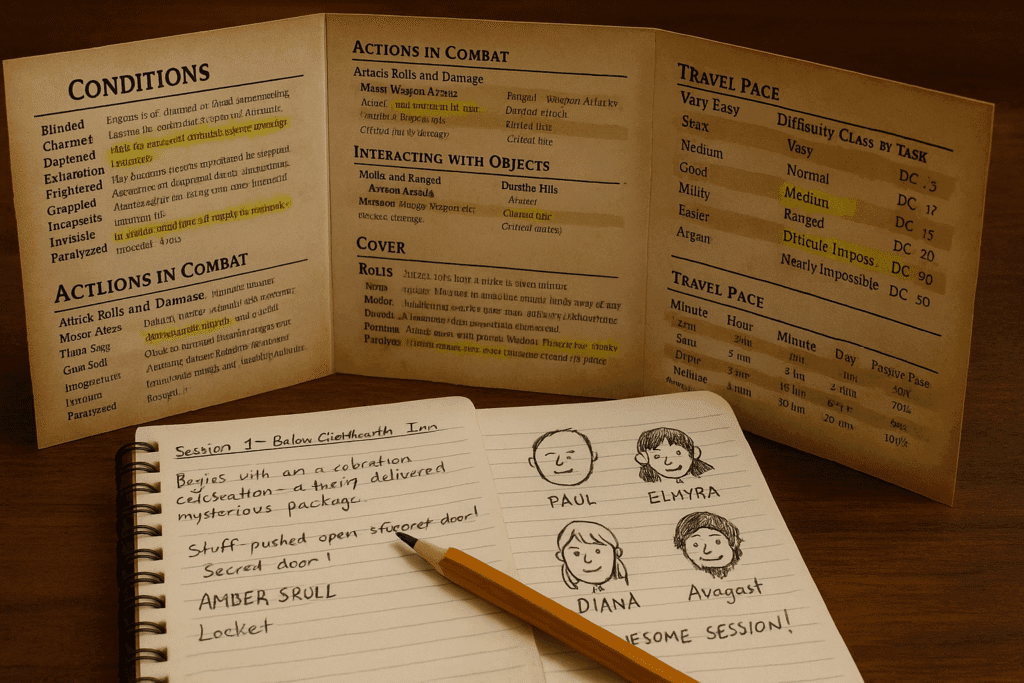
I spent so much time flipping pages. A good DM screen and a rules cheat sheet? Lifesavers.
3. Player Session Notes
A shared Google Doc or printed journal helps players remember what they just spent 3 hours arguing about.
4. Confidence to Say “Yes, And…”
I used to shut ideas down. Now I run with them. DMs don’t need to know everything—they just need to listen.
Caiden grins: “Every time you say ‘yes’ to a crazy player plan, a god of chaos winks at you.”
Final Thoughts
Learning how to be a Dungeon Master in 2025 isn’t about mastering every mechanic or memorising a thousand stat blocks. It’s about listening, adapting, and creating a space where stories come to life. Your tools have never been better. Your community’s never been stronger.
And if you ever feel lost? You’ve got a seat waiting for you at Grim Tavern.
“Not all stories are told aloud,” Jane reminds me. “But they still deserve to be heard.”
See you at the table.

