

If you’ve never had to swing an axe while dangling from a rope bridge, dodging magic missiles, and shouting orders through a smoke cloud—well, you haven’t lived. I’ve fought in more messes than I can count, and if there’s one thing I’ve learned, it’s this: a good fight doesn’t come from the stat block. It comes from how the scene is set, how the foes fight, and how the world reacts around you.
So if you’re a Dungeon Master tired of flat fights and forgettable brawls, let me give you a pint of wisdom. Building dynamic encounters isn’t about throwing harder monsters at your players—it’s about crafting moments they’ll talk about for years.
Let’s break it down.
What Does “Building Dynamic Encounters” Really Mean?
Most new DMs start with the basics: find a challenge rating, pick a monster, and let initiative sort it out. That’s fine—at first. But the most exciting fights in Dungeons & Dragons 5e go beyond numbers.
Dynamic encounters feel alive. They evolve. They force decisions, shake up the battlefield, and reward clever thinking. Players don’t just attack—they adapt. That’s what you want.
A dynamic encounter usually includes:
- Multiple enemy roles or threat types
- An environment that reacts or complicates combat
- Objectives beyond “kill everything”
- Real choices that impact the outcome
Why Static Combat Fails
Flat terrain. One wave of enemies. No movement. No urgency. That’s a common trap.
When every fight plays out the same way, players disengage. Suddenly, the rogue’s sneaky skills don’t matter, and the wizard just picks fireball again. There’s no tension, no puzzle to solve. Just dice until it’s done.
That’s where building dynamic encounters saves your session—and your campaign.
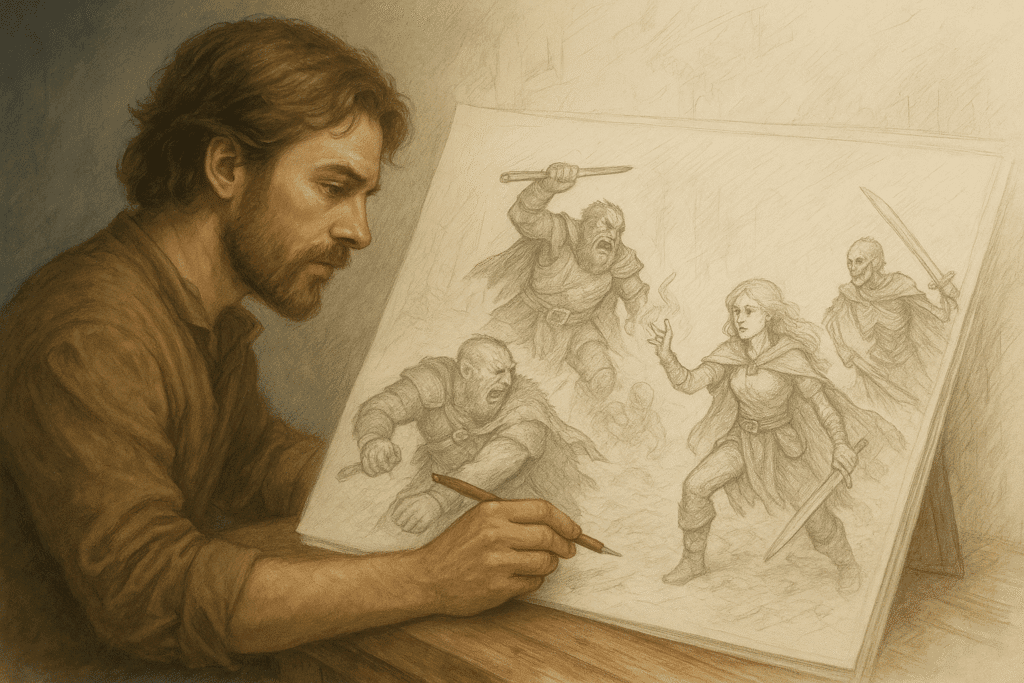
Step 1: Diversify Enemy Roles
Let’s say you’ve got four goblins in a cave. Alone, they’re not exciting. But now imagine this:
- One goblin throws caltrops to slow movement.
- One stays on a ledge, firing arrows.
- Two charge in with torches, aiming for the wizard’s spellbook.
Suddenly, your party is reacting, not just attacking.
Mix melee, ranged, support, and hazard-based enemies. Use monsters that can control space, split the party, or force movement. Throw in something unexpected—a beast under magical control, or an enemy with a personal grudge.
A good encounter tells a little story within the larger tale. And good stories don’t stand still.
Step 2: Make the Environment Matter
I once fought a wight on a ship during a lightning storm. The mast caught fire. The deck tilted. Someone fell overboard. That fight wasn’t hard, but it felt like survival.
When building dynamic encounters, the environment should be more than just a backdrop.
Try these:
- Unstable terrain: Collapsing bridges, shifting floors, icy surfaces
- Interactive objects: Chandeliers, levers, magical statues
- Hazards: Lava flows, freezing winds, wild magic zones
- Verticality: Ledges, scaffolds, trees, pits
Let players use the space. Let enemies exploit it too. If the terrain doesn’t influence decisions, it’s wasted.
Step 3: Add Objectives Beyond Combat
Killing every enemy isn’t always the goal. In fact, your players will thank you when it’s not.
Try encounter goals like:
- Protect the NPC while enemies swarm
- Disrupt a ritual before time runs out
- Escape the collapsing cavern
- Steal the artefact while avoiding patrols
- Survive waves until reinforcements arrive
These goals create urgency and shift the flow of combat. Players might split up. They might ignore enemies. They might argue. That’s good. That’s engagement.
If you’re looking to build more narrative around encounters, check out How to Write Your Own Adventure Module or revisit your Session Zero notes to keep goals aligned with the group’s expectations.
Step 4: Encourage Player Creativity
When you’re building dynamic encounters, leave space for players to do something clever, and reward them when they try.
Let them knock down that statue, light the oil on fire, or grapple the cultist holding the crystal. Say “yes” more than “no,” even if it’s messy.
D&D isn’t just about damage—it’s about agency.
Some of the best moments in my campaigns came from players doing things I didn’t expect, because I gave them room to try.
Bonus Tip: Think in “Encounters,” Not Just “Fights”
Remember, not every dynamic encounter needs to involve combat. Chase scenes, political debates under pressure, or social encounters with time-sensitive consequences can all benefit from the same ideas: stakes, change, and choice.
But when it is a battle, build it to feel like a turning point, not a speed bump.
Final Thoughts from the Front Line
Combat should be more than math. It should tell a story. When you’re building dynamic encounters, don’t just think about damage output. Think about decisions, danger, and drama.
A good fight should feel like a storm: wild, unpredictable, and unforgettable.
So go ahead—tip over the table. Light the curtains on fire. Throw in a second wave when they’re not ready. Make every fight feel like it matters.
And if the rogue ends up swinging from a chandelier into a mimic’s mouth? Even better.
— Dave “The Kegslayer”, bruised but undefeated

