

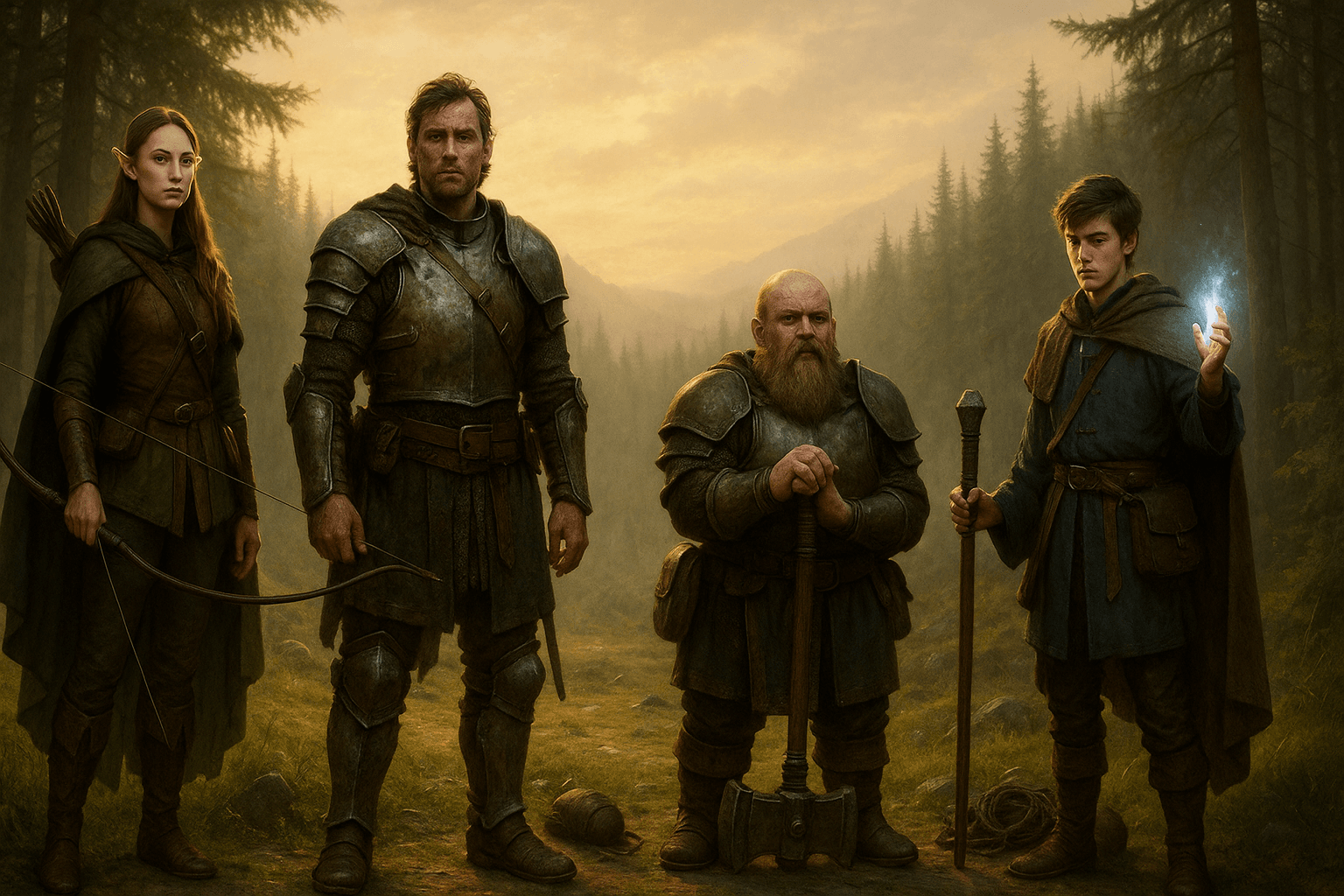
Creating a Dungeons & Dragons character isn’t just a rules process — it’s building someone who might save a village, betray a king, or get eaten by a mimic. This guide walks you through each step of character creation in D&D 5e, from race and class to backstory and sheet mechanics. No filler. No fluff. Just everything you need to get started.
Step 1: Know What You’re Building
Before you crack open a rulebook or roll any dice, ask yourself one question: What do I want to play? You don’t need to know stats yet. Just an idea.
Some examples:
- A knight turned sellsword with a gambling problem.
- A forest-dwelling healer who speaks with animals.
- A fire-slinging outcast with something to prove.
If you’re stuck, check out this pre-generated character resource from D&D Beyond—a helpful starting point for building quick concepts.
Step 2: Pick a Race (and Subrace)
Your race defines your lineage, your traits, and often the way the world treats you. Elves, dwarves, tieflings—each brings benefits and flavour.
Read our full guide: How to Choose a D&D 5e Race
Subraces offer even more choice. Not all races have them, but when they do (like high elves vs wood elves), they give your character an extra layer.
See: Understanding Subraces in D&D 5e
Step 3: Choose a Class
Classes define what your character can do. Want to cast spells? Sneak through shadows? Smash with brute strength? Your class decides.
A few common choices:
- Fighter — Simple, strong, flexible.
- Rogue — Good for stealthy or tricky characters.
- Wizard — High risk, high reward.
- Cleric — Support-focused, but tough.
Each class has subclasses at later levels. Don’t worry about those yet.
Step 4: Assign Ability Scores
Your character has six core stats: Strength, Dexterity, Constitution, Intelligence, Wisdom, and Charisma. Each affects different aspects of gameplay.
There are three ways to assign scores:
- Standard Array (15, 14, 13, 12, 10, 8)
- Point Buy (more control, but capped)
- Rolling (random, risky, fun)
New players should use the standard array. It’s balanced and quick.
Step 5: Choose Background and Alignment
Background gives you flavour and practical perks (skills, gear, roleplay prompts). Examples:
- Acolyte
- Folk Hero
- Noble
- Outlander
Alignment helps define your character’s values, but it isn’t a rule. It’s a guide. Chaotic Good? Neutral Evil? Think more about your character’s decisions than their label.
Step 6: Flesh Out Your Hook and Backstory
You don’t need a novel. Just enough to explain why your character does what they do.
Use our quick guide: How to Create a Character Hook for D&D
Questions to ask:
- What do they want?
- What do they fear?
- Who do they trust?
Bonus points if you connect your character to another player at the table.
Step 7: Fill Out the Sheet
Now you bring it all together. Equipment, features, abilities, proficiencies—all listed on the sheet.
Reference: D&D Character Sheet Tips for Beginners
Stick to level 1 unless the DM tells you otherwise. Print your sheet or go digital with D&D Beyond or Fight Club 5e.
Step 8: Review, Refine, and Get Ready
Take five minutes before session one to read your character aloud. Say their name. Think about how they talk. Picture them in a tavern, on a battlefield, under torchlight.
If something feels off, change it. That’s the beauty of session zero.
Final Thoughts
Character creation isn’t about doing it “right.” It’s about making someone who matters to you—someone you want to play.
The rest? It all starts here.


